What Happens When a Company Is Dissolved?
Company dissolution is the legal process by which a company ceases to exist. In the UK, around 500,000 companies are dissolved each year - far more than the roughly 800,000 new incorporations. Understanding dissolution is important whether you're a creditor, researcher, or business owner.
How Companies Get Dissolved
There are two main routes to dissolution:
1. Voluntary Strike-Off (DS01)
Directors can apply to have their company struck off the register by filing a DS01 form at Companies House. Requirements:
- The company must not have traded or sold off any stock in the last 3 months
- The company must not have changed its name in the last 3 months
- The company must not be threatened with liquidation
- The company must not have any agreements with creditors (e.g., a CVA)
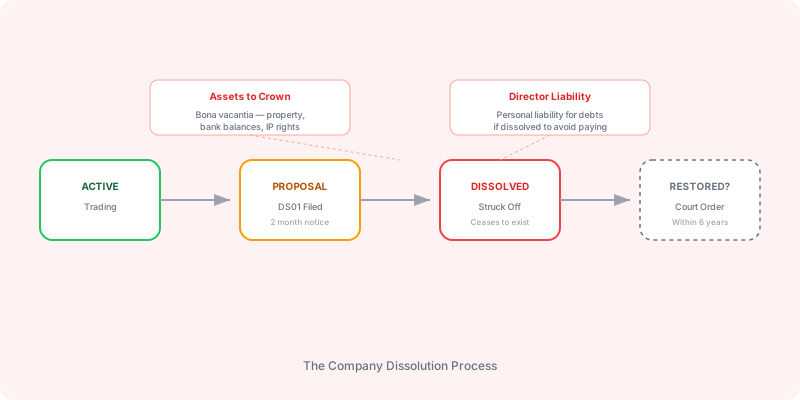
Once the DS01 is filed, Companies House publishes a notice in The Gazette. There is then a 2-month waiting period during which creditors or other interested parties can object. If no objections are received, the company is dissolved.
2. Compulsory Strike-Off by Companies House
Companies House can initiate strike-off proceedings if it has reasonable cause to believe the company is no longer carrying on business. Common triggers include:
- Failure to file confirmation statements
- Failure to file annual accounts
- Mail returned from the registered office
Companies House sends two letters to the registered office. If there's no response, a notice is published in The Gazette, and the company is dissolved after 2 months.
What Happens to the Company's Assets?
This is where it gets interesting - and potentially costly. When a company is dissolved, all its assets become the property of the Crown (known as bona vacantia). This includes:
- Bank balances
- Property and land
- Intellectual property (trademarks, patents, domain names)
- Outstanding debts owed to the company
- Any other assets
The Crown's Bona Vacantia division (part of the Government Legal Department) handles these assets. They may dispose of them, disclaim them, or return them if the company is restored.
What About Debts?
Dissolution does not automatically wipe out debts:
- Creditors can object to the strike-off during the 2-month notice period
- If a company is dissolved with outstanding debts, creditors can apply to restore the company to the register to pursue their claims
- Directors who dissolve a company to avoid paying debts may face personal liability and potential disqualification
Company Restoration
A dissolved company can be restored to the register through two routes:
Administrative Restoration
Available for companies struck off by Companies House (not voluntary strike-off). The application must be made within 6 years of dissolution. The company must bring all outstanding filings and penalties up to date.
Court-Ordered Restoration
Available for any dissolved company, including voluntary strike-offs. An application is made to the High Court (or County Court if the company's paid-up share capital was under £120,000). Common reasons:
- A creditor wants to pursue a debt
- A former shareholder wants to claim assets
- A personal injury claim needs to be made against the company
- The company still owns property that needs to be properly transferred
Court restoration can be requested for up to 6 years after dissolution (or longer in personal injury cases).
Spotting Dissolution Red Flags
When researching companies, these signals may indicate a company is heading for dissolution:
- Overdue accounts: A company that hasn't filed for over a year may already be in compulsory strike-off proceedings
- Gazette notices: A First Gazette Notice means strike-off is imminent
- "Active - Proposal to Strike Off" status on Companies House
- DS01 filed: Visible in the filing history if directors have applied for voluntary strike-off
Using NewcoHunter for Context
While NewcoHunter focuses on newly incorporated companies, understanding dissolution patterns helps contextualise the data. Sectors with high dissolution rates may also have high incorporation rates - which could mean either a vibrant market or a high-churn industry. Cross-referencing new company data with dissolution patterns gives a more complete picture of market dynamics.
Related guides
- How to verify a UK company
- How to check a UK company
- Browse newly registered UK companies
- Company dormancy checker
Related: If a company has received a first gazette notice for compulsory strike-off, learn what the notice means and how the strike-off can be stopped.
About the author
Alexis Pratsides is founder of NewcoHunter and writes these guides from operating the data pipeline behind it. More about Alexis
Related Articles
What Is a Gazette Notice? First and Second Gazette Notices Explained
What a Gazette notice means and the difference between a first and second Gazette notice.
What Is a Compulsory Strike-Off? A Complete Guide
What compulsory strike-off means, how it differs from voluntary strike-off, and how to stop or reverse it.
First Gazette Notice for Compulsory Strike-Off: What It Means and What to Do
What a first gazette notice for compulsory strike-off means, why it is issued, and what to do next.
Ready to find your next client?
Get instant access to new UK company registrations, filtered by industry and location.
Get started free