How to Verify a UK VAT Number: The Complete Guide
Verifying a UK VAT number is essential for any business that trades with other VAT-registered companies. Whether you're checking a supplier's credentials or validating a customer's VAT status for zero-rating, this guide covers everything you need to know.
What Is a UK VAT Number?
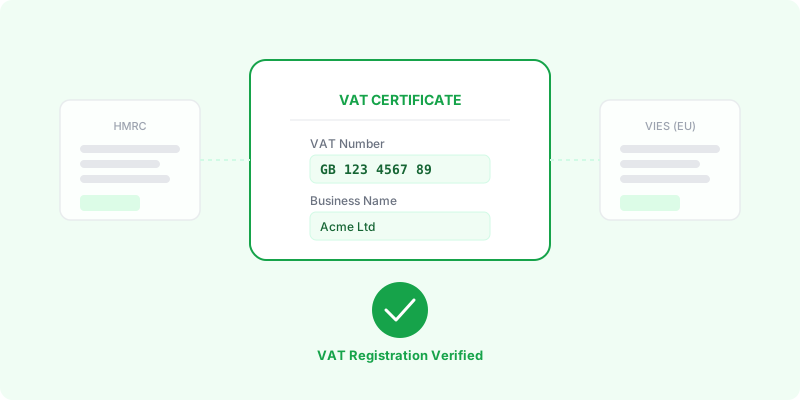
A UK VAT number is a unique identifier assigned by HMRC to businesses registered for Value Added Tax. The format is always GB followed by 9 digits (e.g., GB 123 4567 89). Some government departments use a slightly different format with GD or HA prefixes.
Since Brexit, UK VAT numbers are no longer part of the EU VAT system. This means the old VIES lookup for GB numbers no longer works - you need to use HMRC's own verification service instead.
How to Check a VAT Number with HMRC
HMRC provides a free online tool to verify UK VAT registrations:
- Visit the Check a UK VAT number service on GOV.UK
- Enter the 9-digit VAT number (with or without the GB prefix)
- The service will confirm whether the number is valid and show the registered business name and address
This is the most reliable method as it queries HMRC's live database directly. The service is available 24/7 and is completely free to use.
HMRC VAT API for Bulk Verification
If you need to verify VAT numbers at scale - for example, as part of an onboarding process or regular supplier audits - HMRC offers a free API. The Check a UK VAT Number API returns:
- Whether the VAT number is valid
- The registered business name
- The registered address
- A consultation number (proof of verification for your records)
You'll need to register for an HMRC developer account and create an application to get API credentials. The API supports up to 1,000 requests per day on the sandbox and has generous production limits.
Checking EU and International VAT Numbers
For EU VAT numbers (used by businesses in EU member states), the European Commission's VIES (VAT Information Exchange System) remains the official tool. It covers all 27 EU member states and returns the business name and address associated with each number.
For Northern Ireland, which remains within the EU's VAT system for goods under the Windsor Framework, businesses use an XI prefix instead of GB. These XI numbers can be verified through VIES.
What If a VAT Number Fails Verification?
If a VAT number doesn't verify, don't panic. Common reasons include:
- Recently registered: New VAT registrations can take 24-48 hours to appear in HMRC's system
- Deregistered: The business may have voluntarily deregistered or been compulsorily deregistered by HMRC
- Typo: Double-check the number - transposed digits are a common mistake
- Fraudulent number: Unfortunately, fake VAT numbers do appear on fraudulent invoices
If a supplier's VAT number consistently fails verification, you should not charge them the zero rate. You could be liable for the VAT if HMRC later determines the number was invalid.
Why VAT Verification Matters
Getting VAT verification right has real financial implications:
- Input tax claims: You can only reclaim VAT on purchases if the supplier's VAT number on the invoice is valid
- Zero-rating for exports: B2B sales to EU businesses can be zero-rated, but only if you verify the customer's VAT number
- HMRC penalties: Claiming input tax on invoices with invalid VAT numbers can result in penalties during VAT inspections
- Fraud prevention: Fake VAT numbers are a common feature of carousel fraud and missing trader schemes
Automating VAT Checks with NewcoHunter
When you're researching newly incorporated UK companies, knowing their VAT status is a key part of due diligence. NewcoHunter monitors Companies House for new registrations and delivers them filtered by SIC code, location, and incorporation date - giving you a head start on identifying potential trading partners whose VAT credentials you can then verify.
Key Takeaways
- UK VAT numbers use the format GB + 9 digits
- Use HMRC's free online checker or API for UK numbers
- Use VIES for EU VAT numbers (and XI-prefix Northern Ireland numbers)
- Always verify before zero-rating or claiming input tax
- Keep a record of verification checks for your audit trail
About the author
Alexis Pratsides is founder of NewcoHunter. The product reads the UK company register every day. More about Alexis
Related Articles
UK Companies in Administration - How to Spot the Warning Signs Before It Happens
Companies already in administration are too late to sell to. But the warning signs appear weeks or months before a formal appointment. Here is how to read them from Companies House data.
New Companies Registered in London - Latest Incorporations
London registers more new companies than any other part of the UK - roughly four in ten new incorporations happen here. Here is what the data shows, which sectors are driving it, and how B2B teams can turn the volume into a prospecting advantage.
New Companies Registered in Manchester - Latest Incorporations
Manchester has become the UK's most active business hub outside London, with the North West consistently registering more new companies each year than any other English region beyond the capital. Here is the data, which sectors are growing fastest, and how to prospect effectively.
Explore more
Ready to find your next client?
Get instant access to new UK company registrations, filtered by industry and location.
Get started free